The Hidden Cost of Cheap Pipes
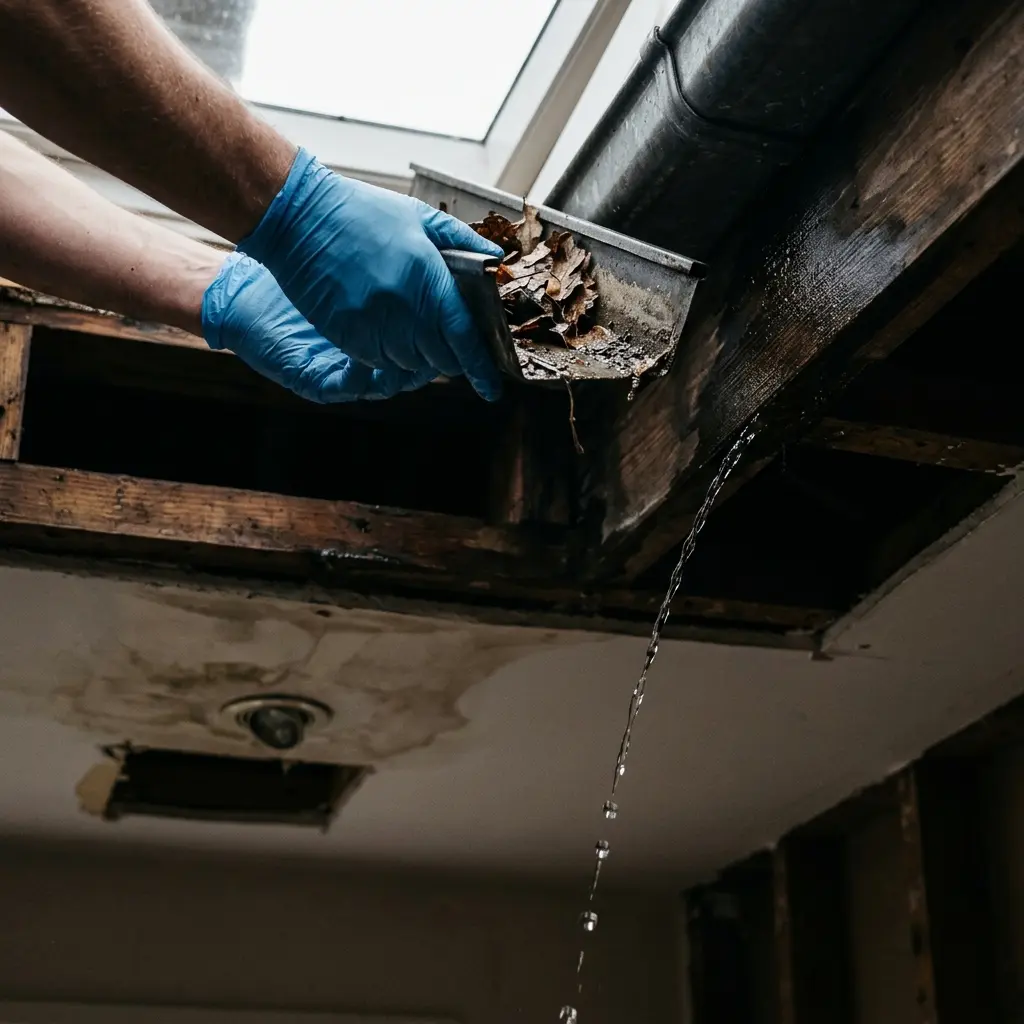
Last week I pulled back a section of gib in a Remuera home and found water tracking down the inside of the wall cavity. The homeowner had called about a damp patch near the skirting board. When we traced it back, the source was a grey polybutylene fitting that had been weeping for weeks, possibly months.
The house was built in 1984.
If your Auckland home was built or replumbed between the mid-1970s and late 1980s, there is a good chance the water lines running through your walls and under your floor are made of the same material.
They are now reaching the end of their working life.
We have been replacing more of these pipes every year. Insurance claims linked to polybutylene failures are climbing. The longer you wait, the higher the risk of a flooded floor, ruined gib, or warped flooring. These are costs that dwarf the price of a planned replacement.
Why Polybutylene Seemed Like a Good Idea
When polybutylene first came onto the market, the industry was genuinely excited about it. It was cheaper than copper, easier to work with, and faster to install. Builders loved it because it kept costs down and sped up the job.
Nobody was raising red flags at the time because the failures take decades to show up.
It is only in hindsight that you realise the warning signs were always there. The material degrades from the inside out. You cannot see it happening, and the pipe looks completely fine on the outside right up until it fails.
What people missed was that chlorine in the water supply was slowly breaking down the pipe wall over time. It was not a dramatic failure. It was a slow process that takes 20 or 30 years to reach a critical point.
That is the kind of problem that gets ignored because nobody connects the leak in 2024 to the pipe that was installed in 1983.
The 25-Year Failure Threshold
The consistent pattern is that failures start appearing around the 25-year mark. Before that you might get the occasional fitting issue, but after 25 years the rate of failure climbs noticeably.
By 30 years you are in a range where the risk is significant enough that you should not be waiting for a failure to act.
The homes that were plumbed in the early 1980s are well past that threshold right now. If your system is in that age range, you are not anticipating a problem. You are already in the window where failures are actively occurring in homes just like yours.
Research shows that polybutylene exposed to chlorinated water degrades approximately ten times faster than in pure water. The predicted time to failure ranges between 25 years at normal temperatures and just 5 years under hot water conditions with chlorine present.
What to Look For Before You Get the Emergency Call
The first thing to check is under your sinks and behind your toilet cisterns. Look for any discolouration, white residue or mineral buildup around the joints and fittings.
That residue is a sign that water has been weeping through a connection, even if you have not seen an actual drip yet.
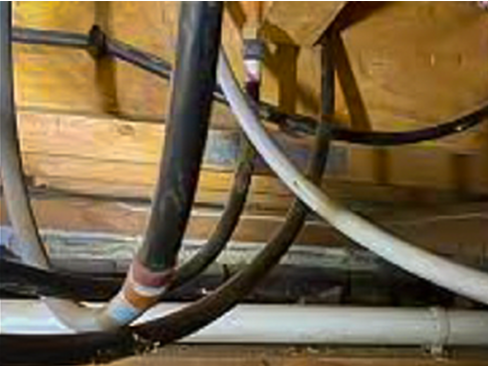
The other thing to look for is the pipe colour itself. If you can see grey or black flexible pipe running through your home, that is polybutylene.
If your house was built or plumbed between the mid-1970s and early 1990s and you have never had the system assessed, that is enough reason on its own to get someone in.
When One Leak Means a System Problem
When you pull back the wall or the ceiling and find one failure, you start checking the rest of the system immediately. The fittings are usually the first thing to go, and when you see that grey or black pipe running through the house you know you are not looking at an isolated problem.
The pipe has the same age throughout the entire system.
One failure is the symptom, not the diagnosis. The rest of the pipes have been under the same conditions for the same amount of time, which means they are all at the same point in their deterioration.
It is never an easy conversation. You show the homeowner the failed section and then you explain that the pipe running to every tap, every toilet, every shower in the house is the same age and the same material.
Most homeowners want to just fix the one leak and move on, and you understand that instinct completely. But you have to be straight with them.
Patching one section while the rest of the system is at the same point of deterioration is not a fix. It is a delay.
The honest conversation is the one that saves them from a much more expensive situation down the track.
The Insurance Problem You Need to Know About
The worst cases are when a pipe fails inside a wall or under a floor and goes unnoticed for days or weeks. By the time it is found, you are dealing with saturated framing, mould through the wall cavity, damaged flooring and sometimes structural timber that has to be replaced.
The water damage bill in those situations dwarfs the cost of a planned replacement by a significant margin.
The other layer to that is insurance.
Some insurers are now limiting or declining claims where polybutylene failure is the cause, so the homeowner ends up carrying the full cost of the damage on top of the remediation. That is the scenario you are trying to avoid.
It is still developing, but the direction is clear. Some insurers have already moved to exclude or limit polybutylene failure claims, and others are likely to follow as the volume of claims increases.
What that means for you right now is that you need to check your policy before something goes wrong. Not after.
The time to find out your claim will not be covered is not when you are standing in a flooded kitchen. A planned replacement is a known cost you can budget for. An uninsured water damage event is not.
Modern Alternatives That Actually Last
Both PEX and copper are good options and the right choice depends on the specific house and the budget.
Copper is the proven material. It has a long service life and most homeowners understand and trust it.
PEX is flexible, faster to install and handles temperature variation well, which makes it a practical choice for a lot of residential repiping work. Research comparing chlorine resistance shows PEX performs significantly better than polybutylene under identical conditions, with no cracking observed where polybutylene failed extensively.
The honest answer is that either material installed correctly by a licensed plumber will serve you well for decades.
What you are moving away from is a material that has a known failure profile. What you are moving toward is a system you do not have to think about again.
What Replacement Actually Involves
The first step is assessing the full scope of the existing system, tracing where the pipes run and identifying the best access points.
In most homes that means opening walls and ceilings in targeted locations rather than pulling everything apart. The existing polybutylene is isolated and removed, new pipe is run through the same pathways where possible, and all the fittings and connections are replaced at the same time.
Most standard Auckland homes can have the full system replaced within one to three days depending on the complexity of the layout. The water is off during the active work but restored each day where possible to minimise disruption.
By the time the job is finished the walls are made good and you have a fully documented new system with no legacy material remaining.
The Lesson in Long-Term Thinking
The lesson is that cheap and fast installation costs are not the full picture.
Polybutylene looked like a good decision in 1982 because it saved money and time on the day. The full cost only became visible 25 years later, and by then it was someone else's problem, usually the homeowner.
The building industry is better at material testing now, but the pressure to reduce construction costs never goes away.
What you want to see is decisions being made on total lifecycle cost rather than upfront installation price. A material that performs well for 50 years is a better investment than a material that saves money on day one and creates a liability two decades later.
What You Should Do Next
The thing most homeowners do not realise is that a planned replacement is a completely different experience to an emergency callout.
When you plan it, you control the timing, the cost and the disruption. When the pipe decides for you, none of those things are in your control anymore.
Polybutylene does not give you much warning. You do not get a slow drip that builds over weeks and gives you time to think. You get a failure, and then you are managing the consequences of that failure while also trying to fix the underlying problem.
The homeowners who act before something goes wrong consistently end up in a better position on every measure.
Get the system assessed. Understand what you are working with. Make the decision on your terms.
If your home was built or plumbed between the mid-1970s and early 1990s, call us on 0800 677 586 or request a quote online. We will inspect the system, explain your options, and give you a fixed-price estimate.
Learn more about our pipe repairs and full replacement service, or for burst pipes and active leaks see our 24/7 emergency plumbing page.