How Your Hot Water System Is Quietly Costing You Money
Power prices have risen 21% over the past three years in New Zealand. Last winter, one in five New Zealanders went to bed early to stay warm, and nearly the same number cut back on food to pay their power bill.
The advice you hear is usually about timing your usage or switching plans. That is fine if your systems can actually support it.
But if you have an ageing low pressure cylinder sitting in your airing cupboard, those strategies will not deliver the savings you expect. The cylinder itself is the problem.
The Three Signs Your Cylinder Is Wasting Electricity
The first thing to check is the cylinder jacket. Walk up to your hot water cylinder and place your hand on the outside. If it feels warm to the touch, the insulation has degraded and the cylinder is losing heat constantly. That means the element is running more often than it should just to maintain temperature.
The second check is the pressure and temperature relief valve. Look for evidence of weeping or discharge around the valve. You will often see a small pipe running down the side of the cylinder to a drain. If that pipe is dripping, the system is working harder than it needs to.
Here is what is actually happening. When your cylinder heats water, the water expands. On a low pressure system, that expanded water has somewhere to go because the system is designed with enough tolerance to handle it. On an older system where the valves have started to wear, that expansion has to be managed by the relief valve. The valve opens slightly, releases a small amount of water, and reseats itself.
When the valve is weeping regularly, it tells you one of a few things. Either the incoming pressure is higher than the system is rated for, the thermostat is set too high, or the valve itself has worn to the point where it is no longer seating properly.
You are losing heated water down the drain. The element is running to replace that lost heat. And if the valve has worn past the point of proper function, you have a system that is no longer protected the way it should be.
The third check is the compliance plate. Anything over 15 years and the insulation is well below what current standards require. Cylinders that are 25 or 30 years old are not uncommon across Auckland. The power bill that unit has generated over a decade would have paid for a replacement several times over.
What That Actually Costs You
Hot water accounts for around 30 percent of the average New Zealand household's power bill. If your cylinder is running its element more frequently than it should because it is constantly replacing lost heat, you are paying a premium on that 30 percent every single month.
On a typical Auckland household power bill, hot water might sit anywhere between $80 and $150 a month depending on usage and your plan. Even a 15 or 20 percent inefficiency on top of that adds up to real money over a year.
The seasonal test tells you everything. A well functioning cylinder should not vary dramatically in running cost between summer and winter because it is maintaining a stored temperature, not heating on demand. If your hot water costs spike significantly in winter, that is often a sign the cylinder is losing heat faster than it should and working harder to compensate.
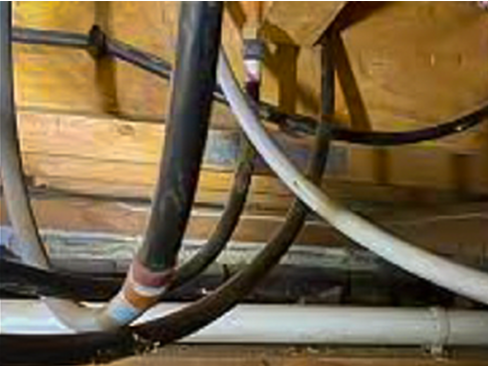
Where the cylinder lives matters less than what is happening to the pipework around it. The tank itself is well insulated, so an external location or a standard cupboard will not change how hard the element runs. The pipe leaving the top of the cylinder is a different story. New Zealand regulations require the first two metres of the hot water distribution pipe to be lagged. If that pipe is bare, cold water inside it sinks back into the top of the tank and the stored hot water rises up past it, slowly bleeding heat out through that one uninsulated run. Over the course of a week you can lose a meaningful amount of stored heat through a single bare pipe.
Why a Cylinder Blanket Is Not Always the Answer
A cylinder blanket is not a bad idea on a cylinder that is otherwise in good condition. Wrapping an older cylinder can reduce heat loss by up to 40 percent. A two hundred dollar blanket that buys you a few more years is a reasonable decision.
But there are two situations where a blanket is the wrong answer.
The first is when the cylinder is already past its reasonable service life. Wrapping an insulation blanket around a 25 year old unit with a worn relief valve, a thermostat that is no longer accurate, and insulation that has been degrading for two decades is treating the symptom rather than the problem. You might pick up a small improvement in heat retention but you have not addressed any of the underlying issues and you are still one failed thermostat away from a much bigger problem.
The second situation is when the blanket is fitted incorrectly. Cylinders have been wrapped in a way that covers the relief valve discharge pipe or restricts access to the compliance plate. That is actually dangerous. The relief valve needs to be able to operate freely and discharge safely. If that is compromised, the protection the valve provides is compromised with it. New Zealand plumbing regulations are clear on this and for good reason.
A blanket buys you time on a cylinder that has time left to give. On a unit that is already showing multiple signs of age, it is a false economy that delays a decision you are going to have to make anyway.
The Most Common False Economy
Patching the valves.
A homeowner gets a plumber in for something unrelated, the plumber notices the relief valve is weeping, and they replace the valve. Sixty or eighty dollars, problem solved. Except the valve was not the problem, it was the indicator. The reason the valve was weeping is still there. The pressure is still wrong, or the thermostat is still running hot, or the cylinder is still losing heat faster than it should.
Three months later something else shows up and they patch that too.
This pattern shows up a lot in older homes across Auckland where the cylinder has been maintained in a reactive way for years. Every individual repair makes sense in isolation. But when you add up what has been spent over five years keeping a 20 year old cylinder running, it is not uncommon to find that the total cost of those repairs is sitting somewhere between a third and half the cost of a full replacement.
And at the end of it you still have a 20 year old cylinder.
The replacement conversation is the one people avoid because it is a larger number on a single invoice. But it is the wrong way to look at it. A new cylinder installed correctly, with current insulation standards and a full valve set that is not compensating for an ageing system, pays for itself over time in reduced running costs and eliminated repair bills.
When Weak Shower Pressure Means More Than Annoyance
Weak shower pressure is rarely just about the shower. It is a signal about your entire hot water system.
If the cold pressure is fine and the hot is weak, the issue is in the hot water system rather than the incoming mains supply. If the weak pressure is consistent across all the hot outlets in the house, you need to know what type of cylinder is installed.
A low pressure cylinder runs at a reduced supply pressure. Some older rural systems are still gravity fed from a header tank, but most low pressure cylinders in Auckland today are fed through a pressure reducing valve on the mains that steps the supply pressure down before it reaches the cylinder. Either way, you are never going to get great pressure from a low pressure system regardless of what condition the cylinder is in.
That is a booster pump situation.
A booster pump on its own is around $1,099 installed. That solves the pressure problem today but it does not touch the efficiency problem, the heat loss, the worn valves, or the age of the unit. If the cylinder is already showing the signs we have talked about, that booster pump is going onto a system that still has a finite life. You are going to be back in this conversation in two or three years, except next time you will also be dealing with whatever the cylinder decides to do.
A mains pressure cylinder upgrade from around $3,400 installed removes the low pressure system entirely. You get a cylinder rated to 1,400 KPA, delivering more than 40 litres of heated water per minute, with current insulation standards and a full valve set installed correctly from scratch.
The pressure problem is solved because a mains pressure system does not rely on gravity feed. The efficiency problem is solved because the unit meets current New Zealand energy performance standards. And the age problem is solved because you are starting the clock again on a new unit with a full warranty.
If the cylinder is under ten years old and otherwise in good condition, a booster pump is the right call. If the cylinder is ageing and already showing inefficiency, spending $1,099 on a pump is putting new tyres on a car that needs an engine.
Get on the Right Power Plan
Most Auckland households are already on a network plan where the lines company controls when your hot water element runs, switching it off at peak times and back on overnight when power is cheaper. You do not need to fit a timer to take advantage of that, the supplier is doing it for you in the background, and that is why your bill is lower than it would be otherwise.
What is worth doing is reading your plan. Some retailers offer better off peak rates than others, and some give you a meaningful discount for staying on a controlled hot water supply. A five minute review of what plan you are on, and what else is available, can shave a real amount off the hot water portion of your bill without changing a single thing about the cylinder itself.
What Failure Actually Looks Like
The best case scenario is that it fails slowly. A seam starts to weep, you notice a damp patch on the ceiling or a wet cupboard floor, and you call before it becomes something worse. That is the version where the damage is limited and the replacement is straightforward. It is still an unplanned cost and an unplanned disruption but it is manageable.
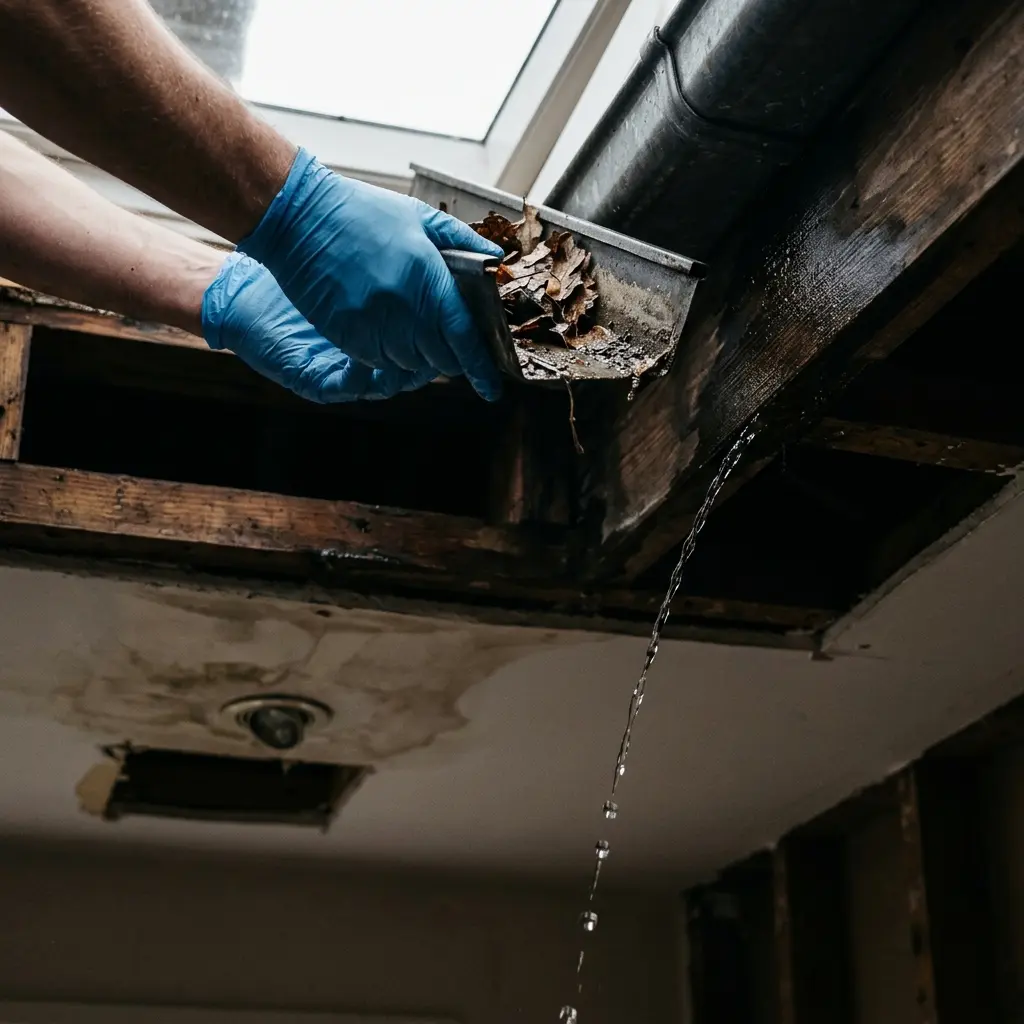
The worst case is what shows up in some of those older Auckland villas and bungalows where the cylinder is tucked away in a cupboard and nobody checks it. The cylinder fails, water leaks into the surrounding structure, saturates the walls, works its way into the gib, and by the time someone notices a stain or damp patch the damage is already significant.
Cylinder failures have meant replacing framing, reinsulating, replacing gib across multiple rooms, and repainting. The plumbing bill is the smallest part of that invoice.
This is exactly what current building code is designed to prevent. Any cylinder we install today must sit in a drip tray plumbed to drainage, so if the tank fails the water runs out to the gully instead of through your floor. Even a tray without a drain is better than nothing, because you can spot water pooling and call it in before it becomes a flood. When we replace a leaking cylinder we have to bring the whole installation up to current code, which means the tray, a tempering valve, seismic restraints and a full valve set. It is a bigger invoice on the day, but it is the cost of doing it once and doing it properly.
Then there is the insurance question. Some Auckland insurers are starting to look closely at the age and condition of cylinders when a water damage claim comes in. If you have a 25 or 30 year old cylinder that has failed and caused damage, and your insurer determines the failure was a foreseeable maintenance issue rather than a sudden event, you may find the claim is declined or significantly reduced.
The total cost of an unmanaged cylinder failure in a worst case Auckland scenario can run well into five figures when you add up the water damage remediation, the replacement cylinder, and the disruption. A planned replacement at the right time costs a fraction of that and happens on your schedule, not the cylinder's.
What You Need to Understand
The hot water system is not a set and forget appliance.
Most homeowners treat it that way because for most of its life it just works. You turn on the tap, the water is hot, and you do not think about it again until something goes wrong. That invisibility is exactly what makes it expensive when it finally fails. Nobody budgets for it, nobody plans for it, and when it goes it always seems to go at the worst possible time.
Your cylinder has a service life, it has warning signs, and it responds to how it is managed. A cylinder that is checked periodically, that has its anode replaced when it needs it, and that is sized correctly for the household, will run efficiently and last its full service life. One that is ignored until it fails will cost significantly more over its lifetime and significantly more when it finally gives up.
You are not just paying for hot water. You are paying for how well the system delivering it has been looked after.
What You Should Do Next
Get it assessed. Understand what you have got. And make decisions on your terms before the cylinder makes them for you.
If your cylinder is 15 years old or older, or if you are seeing any of the warning signs above, call us on 0800 677 586 or request a quote online. We will inspect the cylinder, run through the options, and give you a fixed-price estimate.
For full details on cylinder repairs, replacements and mains pressure upgrades, see our hot water repairs and installation service. For a leaking cylinder or no hot water right now, our 24/7 emergency plumbing team is on call.