Why Plumbing Problems Demand Integrated Thinking
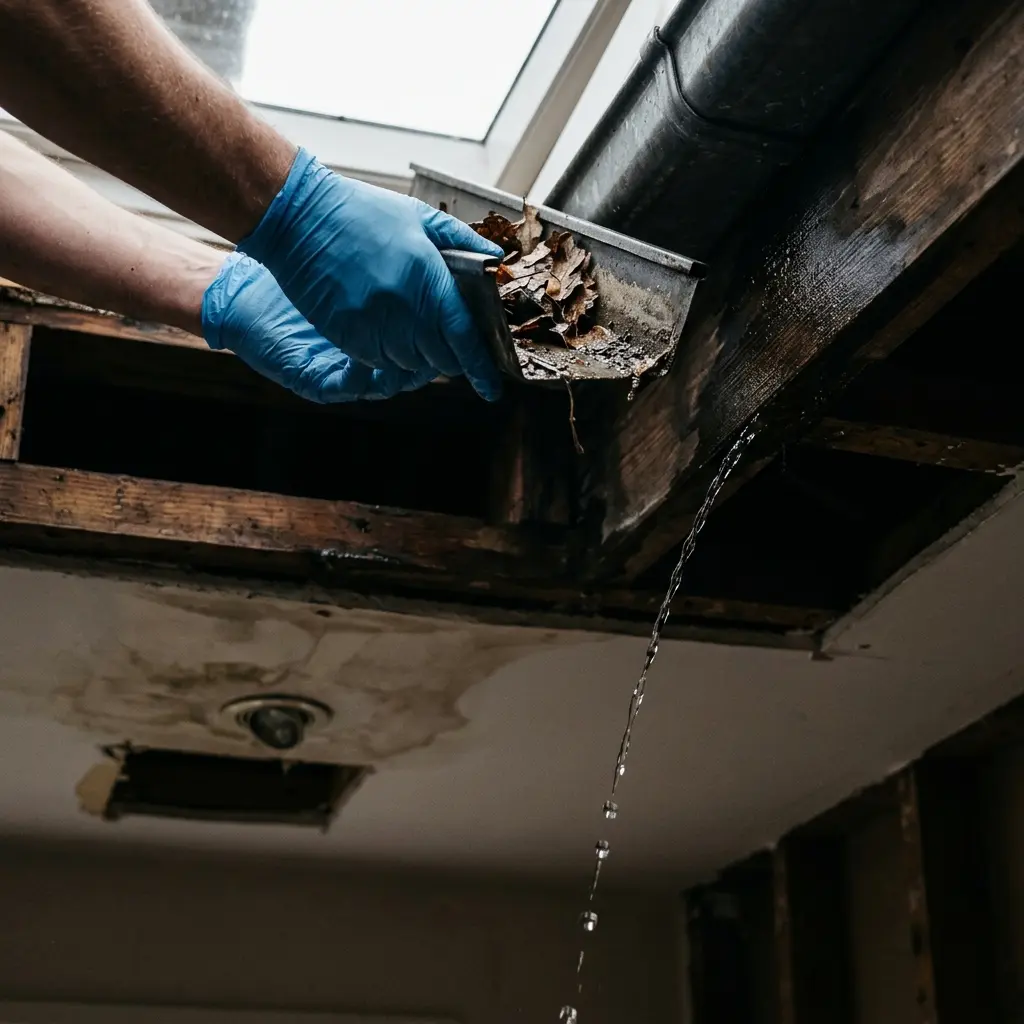
A villa in Mt Eden, summer of 2023. The owners had a damp patch on their bedroom ceiling that kept coming back. By the time they called us, they had been through three tradespeople.
The first was a plumber. He pressure tested the bathroom waste lines on the floor above, found them sound, and told the owners it was not a plumbing problem.
A builder came next. He pulled a section of ceiling lining down, found the framing was wet but could not locate a source from inside the cavity. He recommended replacing the lining, painting it, and watching it.
A painter came third. He sealed and repainted the ceiling. Within six weeks the stain came back, slightly larger than before.
When we got there we did not start in the bedroom. We went up onto the roof first. The villa had a hidden box gutter behind the parapet on the street side, original to the build, and the outlet had partially blocked with debris from a neighbour's pohutukawa. In heavy rain the gutter was backing up and overflowing the back lip, and the water was running down the inside of the wall cavity. From there it was tracking along a roof joist and dripping out at the lowest point, which happened to be above the bedroom ceiling, around two and a half metres horizontally from where it had entered.
None of the three previous tradespeople had been on the roof. Each had inspected within the boundary of their trade, found nothing, and left. The water entry point was not a plumbing fault, not a building fault, and certainly not a paint fault. It was a spouting and roofing fault presenting as a plumbing problem.
We cleared the outlet, replaced the corroded section of box gutter, repaired the framing, and repainted. The ceiling has been dry ever since.
Building Systems Do Not Respect Trade Boundaries
Water almost never shows itself where it actually entered. It finds the path of least resistance, runs along whatever solid surface it touches, and only becomes visible when something interrupts the path. A joist, a top plate, the back of a sheet of plasterboard, the channel of a downlight cutout.
Two and a half metres is not unusual. We have traced leaks four and five metres from the actual entry point. On a multi-storey job we have seen water enter at the roof and present two floors below in a wardrobe with no obvious connection.
Gas behaves similarly. A faint odour in a hallway can come from a fitting in a wall cavity well away from where the smell is strongest, because gas follows air paths through framing rather than going where you expect it to.
Drainage is the same in reverse. A blockage halfway down a line will present at the lowest fixture in the house, not at the fixture closest to the blockage.
What this does to a single-trade diagnosis is mechanical. The trade arrives, inspects what is near the symptom within the boundary of their scope, finds nothing, and accurately reports that there is no fault in their area. They are not wrong. They are just answering the wrong question.
The actual question is not "is there a plumbing fault near this damp patch?" The actual question is "what is the path the water has taken to arrive here?" Answering that second question requires looking at the whole building as one connected system, which a single-trade callout is not set up to do and is not paid to do.
The homeowner ends up paying three trades to each correctly tell them nothing is wrong, while the actual fault carries on uninterrupted.
Three Patterns at the Edge of Scope
When a specialist realises the problem is outside their lane, we see three patterns. Most tradespeople are honest, and we want to be fair here.
The first pattern, and the best of them, is the trade who tells the customer plainly that the cause is not in their scope and recommends who to call next. A good plumber who suspects the issue is roofing will say so. We do the same in reverse. This response costs the trade the rest of the job but it serves the customer.
The second pattern is the most common. The trade completes their inspection, finds nothing wrong in their lane, writes up what they did, charges the callout, and leaves. They are not being dishonest. They have done what they were called to do. But they do not name the next step, because naming the next step is not their job and they cannot be sure they would be right. The customer is left holding an invoice and a problem that has not moved.
The third pattern is the one that does damage. The trade reaches the edge of their scope, does not want to leave empty handed, and starts guessing outside their lane. A plumber who decides the issue must be roofing and starts cutting into a soffit. A builder who decides it is a pipe and opens up a wall.
When the guess is wrong, the customer now has the original problem plus a second problem caused by the guess, and no one is accountable for either.
When Guessing Outside Your Lane Creates Two Problems
A villa in Pt Chevalier, late 2022. The owner had called a roofer about a small leak around a flashing on the back roof, and had also mentioned a faint musty smell near the bathroom. The roofer dealt with the flashing, then noticed an older lead-flashed pipe poking up through the roof nearby. He decided it looked redundant, capped it with a screw-on cap and a heavy bead of silicone, and presented it to the owner as a tidy-up.
That pipe was the soil vent for the bathroom stack.
About two weeks later the owner started getting gurgling from the toilet and basin every time the shower ran. The musty smell became a clear sewer smell, mostly in the bathroom and laundry. They called a drainlayer who tested the drains and confirmed they were running freely. He left without a diagnosis. They then called us.
We could smell it as soon as we walked in. We asked what had changed in the last month. The owner mentioned the roofer. We went up onto the roof and found the capped vent within a minute.
With the vent sealed, every fixture in the bathroom was pulling air through its own trap to balance the pressure when water ran, which siphoned the traps dry and let sewer gas straight up through the floor wastes. The drainlayer had been correct. The drains were fine. The drainage system had simply been deprived of the air it needed to function.
We removed the cap, cleared the silicone, and re-flashed the penetration properly. Within twenty four hours the traps were holding water again and the smell was gone.
The original leak the roofer was called for cost the owner about four hundred dollars. The two weeks of guessing that followed cost them another fourteen hundred between the drainlayer and us, and very nearly cost them their bathroom ceiling lining as well.
The reason an integrated team avoids all three patterns is structural rather than virtuous. We are not standing at the edge of a scope wondering whether to step over it. The roof, the spouting, the gas, the drainage and the plumbing are all our scope. There is no edge to stand at.
Reading the Pattern Around the Symptom
Forty years teaches you to read the pattern around the smell, not the smell on its own.
A dry trap smell is local and constant. It sits over one fixture, usually a guest bathroom or a laundry tub that has not been used for a while, and it does not get worse or better through the day. Run water down that fixture for ten seconds and it is gone for a week.
A drain blockage smell has organic notes in it, food and greywater rather than just sewer, and it gets worse the more you use the fixture upstream of the blockage. The smell follows the use.
A venting failure smells like clean sewer gas, no organic edge, and it does the opposite of a blockage. It gets worse when you use other fixtures, because every time water runs somewhere in the house the system is pulling air from the nearest trap to compensate, and that trap empties. So the bathroom smells worst right after someone has used the kitchen sink or the laundry. The smell moves around the house in a way that does not match where the water is being used.
The other tell is sound. Venting failures gurgle. Toilets glug, basins clear slowly with a sucking noise, the shower waste burps when the washing machine drains. Blockages and dry traps are silent. If the house is talking to you while it drains, the problem is almost always air, not water.
Making Invisible Systems Visible
We do not stand in someone's kitchen and explain negative pressure in a drainage stack. We run the kitchen tap and ask them to listen to the toilet in the next room. It takes about fifteen seconds and they hear it for themselves. Once they have heard it, they own it. We have not taught them anything. The house has.
The analogy we reach for most often is a drinking straw. Put your finger over the top of a straw full of water, lift it out of the glass, and the water stays in the straw. Take your finger off, and it falls out. A drainage system is the same. The vent pipe on the roof is the open top of the straw. Cap it, and the water in the traps gets held in place by suction. Run a fixture somewhere else, the suction breaks, and the trap empties.
Most people have done this with a straw at some point. It bypasses thirty minutes of plumbing theory in one sentence.
Four Physical Analogies That Do the Work
Roof, spouting and drainage as an umbrella, a gutter and a downpipe. The roof is the umbrella over your head. The spouting is the gutter that catches the runoff and directs it. The downpipe and the stormwater drain take it away from the building. Most people picture these as three separate things bolted to a house, and once you frame them as one chain doing one job, the conversation about why a spouting failure can show up as a plumbing problem becomes obvious. Break any link in the chain and water ends up where it should not be. The other two links cannot save you.
Gas appliances as a candle in a jar. Every flame needs air. Put a candle in a jar with the lid on and it dies within a minute. A gas hob, a gas hot water unit, a gas fire is exactly the same, just slower and more dangerous. When we are trying to explain why a kitchen renovation that sealed up an old wall vent has caused a gas appliance to start sooting or shutting down, the candle does the work for us. People immediately understand that you cannot keep burning fuel in a sealed room.
Wall cavities as a wet sponge in a plastic bag. When water gets into a cavity, the cavity has no way to dry out. The framing acts like a sponge holding the moisture, and the lining and cladding act like the bag. This is the analogy we use when an owner asks why we cannot just paint the stain out. Painting the stain seals the bag tighter. The sponge stays wet. The framing keeps rotting behind a fresh coat of paint.
Drainage as a slide, not a pipe. People think of drains as pipes that move water by being pipes. They are not. They are slides. Gravity does the work. The pipe is just the surface gravity is acting on. Once you frame it that way, why a tiny dip or a back-fall in a section of drain causes endless blockages becomes self-evident. Water sits where the slope stops. Everything else collects on top of it.
Each of these does the same job. They take a building system that the homeowner cannot see, and reframe it as something they have already physically held in their hand.
Do Not Start Where the Customer Points
That is the one thing, and it takes years to override. Every apprentice walks into a job and goes straight to the wet patch, the dripping fitting, the cold radiator, the smell. It is the obvious move. It is what the customer is asking for. It is also almost always wrong as a starting point, because the symptom is the end of the story and we need the start of it.
What we are trying to teach is to walk the system backwards from the symptom to its source before touching anything. If it is water, we go to the roof and the spouting first, then the cylinder, then the manifold, then down through the walls, and only arrive at the wet patch last. If it is gas, we start at the meter and work in. If it is drainage, we start at the boundary trap and come back up the line.
By the time we get to the thing the customer pointed at, we already know whether it is the cause or just the announcement.
This is hard for a new tradesperson because it looks slow and it looks like you are ignoring the customer. The customer has been staring at this stain for a fortnight and you have just walked past it to go and look at their roof. There is a discipline to that, and it has to be taught explicitly, because every instinct in the moment tells you to engage with the visible problem.
Once it becomes automatic, you stop seeing faults and you start seeing paths. The fault is a dot. The path is a line. Apprentices fix dots. Experienced tradespeople trace lines.
When Tracing the Line Matters Most
A Saturday night call, around ten pm, in Greenlane. The owners had water coming through their kitchen ceiling fast enough that one of the LED downlights had filled up and was sitting full like a small fishbowl. They had already turned the mains off at the toby. They wanted us to find the burst and stop the water so they could go to bed.
The obvious move was the wrong move. Find the dripping fitting, cap it, drain the section down, deal with it properly in the morning. Twenty minutes and gone.
We did not do that. We went to the hot water cylinder first, which was in a cupboard on the floor above, because the water at the leak point was hot rather than cold and that ruled out a mains supply burst. The cylinder cupboard was warm in a way it should not have been. The cylinder itself was too hot to hold a hand against through its jacket. The temperature and pressure relief valve at the top was hissing continuously. And the discharge pipe coming off that valve, which by code should run out through an external wall with a visible open end, had been routed by a previous installer up into the ceiling void and terminated there, out of sight.
The thermostat had failed in the closed position. The element was running continuously. The cylinder was at or near boiling and building pressure, and the relief valve was doing its job correctly, venting the overpressure into the only place it could go. That place happened to be the kitchen ceiling.
If we had walked into the kitchen, found the dripping joint in the discharge pipe inside the ceiling, and capped it, we would have shut the only relief path on a cylinder that was over temperature and over pressure with the element still energised. Cylinders that fail in that state do not fail gently. They go through ceilings, and sometimes through roofs.
What we actually did, in order, was kill the power to the cylinder at the switchboard, then close the cold inlet, then open a hot tap downstairs to depressurise, then deal with the water in the ceiling. New thermostat, new element while we were in there, discharge pipe re-routed to code through the external wall, pressure test, sign off.
The whole job took about three hours instead of twenty minutes. The visible problem was a leak. The actual problem was a cylinder that was an hour or two from rupturing above a sleeping family. The line and the dot in that case were not even on the same scale of consequence.
Cohort Failure and Honest Conversations
Cohort failure is one of the most reliable patterns in the trade and one of the most useful in a customer conversation, because it lets you talk about what is coming rather than only what has already happened.
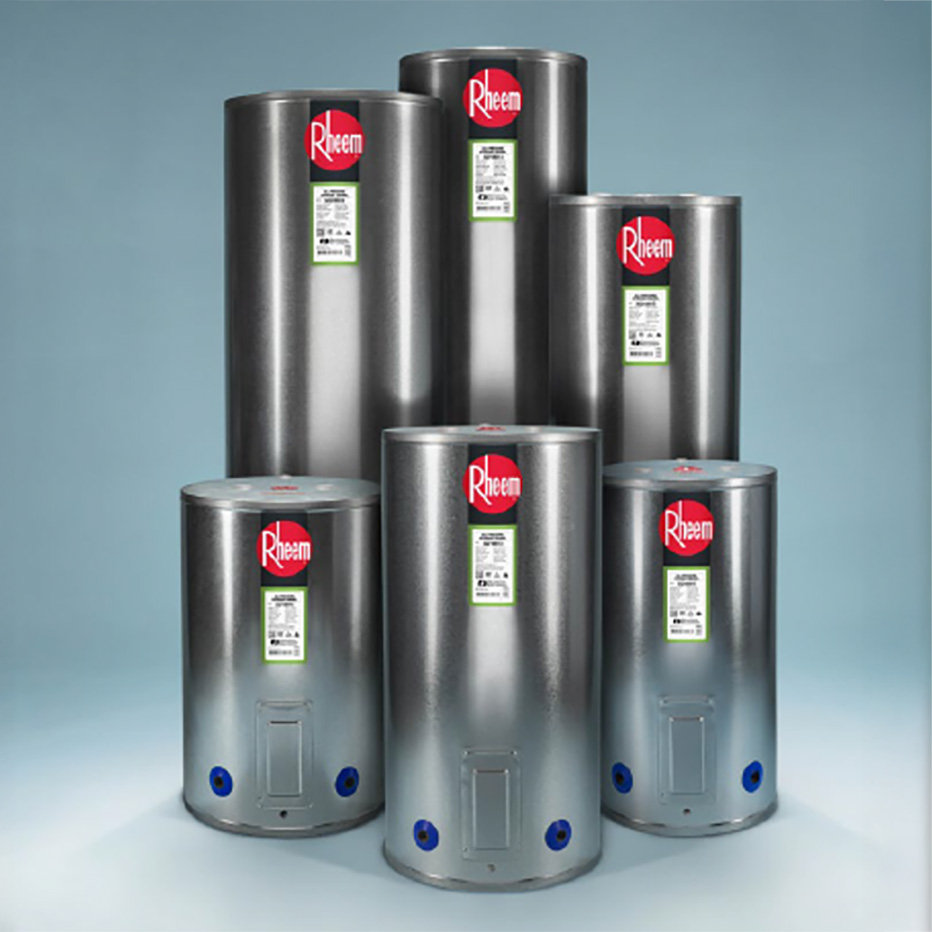
Cylinder internals. Element, thermostat, high limit cutout, anode, and the TPR valve all live in the same hot, pressurised, mineral-rich water for the same number of years. When one fails, the others are not far behind. The TPR is usually the last to go because it operates least often, but once a cylinder is past about twelve years, replacing one of these in isolation is almost always false economy.
Toilet cistern internals. The inlet valve, the flush valve, and the bottom seal are all rubber and plastic of the same era. When one starts dripping, the other two are typically within a year of doing the same. We have lost count of how many homes we have been called back to twice in six months because the first visit only replaced the screaming part.
Tap spindles and washers across a house. All the taps in a house were almost always installed in the same week by the same plumber from the same box of fittings. They wear at the same rate. If the kitchen mixer is dripping at year fifteen, the laundry and the bathroom basin taps are within months of joining it.
Spouting brackets and roof fixings. Galvanised steel exposed to the same UV and the same rain on the same roof corrodes at the same rate. When one bracket lets go in a storm, the rest of that run is the next forecast away from doing the same.
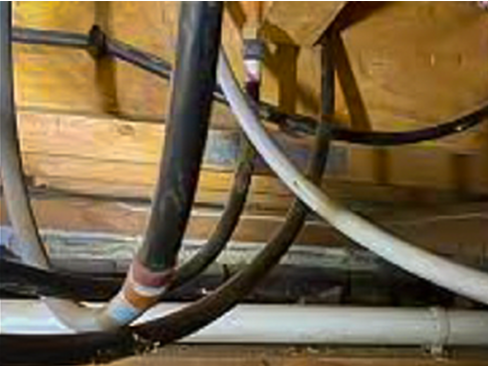
Polybutylene pipework. This is the most aggressive cohort we deal with. If one fitting fails on a Dux Quest system, every other fitting in the house is on the same clock. We will not patch one and leave the rest, because patching one and leaving the rest is how a small leak becomes a flooded house six months later. We have written separately about the hidden cost of cheap pipes for homeowners who suspect their system might be on borrowed time.
How this changes the conversation is straightforward. We do not stand in someone's kitchen and only quote them on the visible failure. We tell them what cohort the failed part belongs to, what the rest of that cohort is likely to do over the next two to five years, and what it would cost now to deal with the cohort versus what it will cost as a series of separate emergencies. Then we let the homeowner choose.
The honesty cuts both ways. If the cohort is genuinely sound, we say so. We do not bundle parts in just because we are already on site. Customers can tell the difference between "while we are here" and "you should replace this because it is genuinely close", and the trust we build by getting that distinction right is the reason we keep getting called back to the same homes for thirty years.
How to Identify Genuine Integrated Capability
There are about five tells, and they all show up in the first phone call before anyone steps on site.
The first tell is the diagnostic question. A genuine integrated tradesperson will ask you what changed, when it started, who else has looked at it, and what they said. They are already tracing the line. The subcontractor model does not bother, because the person on the phone is not the person who will be on the job. They take the address, the symptom, and a slot in the diary.
The second tell is the on-site inspection. Anything beyond the simplest job, the integrated team will want to come and look before quoting. They are not being precious. They are protecting you from committing to a fix before understanding the cause. A firm price quoted over the phone for a complex symptom is a price that assumes the cause is the obvious one. It almost never is.
The third tell is what they say about adjacent trades. Ask the question directly. "If this turns out to be partly a roofing issue, or partly drainage, who handles that?" An integrated team will say "we do, that is the same crew". A subcontractor model will say "we have a guy" or "we work with someone". "We have a guy" is the phrase to listen for. It is honest, but it is telling you exactly what you are buying.
The fourth tell is the tickets. Ask who specifically will be on site and what they are licensed for. Craftsman plumber, gasfitter, certifying drainlayer, roofing experience. These are public registrations. The integrated team will give you names and ticket numbers without flinching because the people on the tools are their own staff. The subcontractor model will tell you the head office is licensed and the tradespeople will be "qualified". Those are different statements.
The fifth tell is warranty. This is the question that does the most work in the shortest time. "If this problem comes back in twelve months, who warranties the whole job?" An integrated team warranties the whole job, because they did the whole job. A subcontracted job has a warranty on the plumbing from the plumber, a warranty on the roofing from the roofer, and a warranty on the drainage from the drainlayer. When the bathroom leaks again because the roofer's flashing has failed and the moisture has wrecked the plumber's repair, you are now chasing two companies who will each tell you the other is responsible. That is the four-trades-pointing-at-each-other cycle, and it is built into the contract structure before anyone picks up a tool.
If you want to compress all of that into a single question to ask three quotes in a row, it is this one. "Are you the company that will own this job from diagnosis to twelve months after I have paid the invoice, or are there other parties involved?" The answer, and the body language around the answer, will tell you everything you need to know.
The Honest Counter-Argument
Specialisation does have its place. For highly complex installations or commercial-scale work, deep specialisation serves a purpose. A hospital HVAC system, a commercial kitchen extraction setup, a high-rise fire protection system, these demand specialists who do nothing else.
But for the everyday Auckland home, integrated plumbing, gas, drainage and roofing services beat fragmented expertise on cost, speed and outcome.
The villa with the blocked box gutter did not need a roofing specialist, a plumbing specialist, and a building specialist. It needed someone who understood how water behaves when it enters a wall cavity, how roof joists are laid, and where ceiling linings fail under moisture load. That is not three different skill sets. That is one skill set applied to three connected systems.
The Pt Chevalier bathroom did not need a roofer and a drainlayer. It needed someone who knew what a soil vent does, where it terminates, and why capping it creates a venting failure two weeks later.
The Greenlane cylinder did not need a plumber and an electrician. It needed someone who could read the signals of a system in overpressure and knew the sequence of component failures that precede a rupture.
These are not edge cases. These are the jobs we see every week.
Trade Categories Are Not a Property of Your House
A homeowner does not have a plumbing problem or a roofing problem or a drainage problem. They have a house that is doing something it should not be doing.
The categories of plumber, roofer, drainlayer, gasfitter, spouting installer are not how the building was designed. They are how the labour market has chosen to slice the work up, mostly for licensing and training reasons that made sense in 1970 and have not been seriously revisited since.
That mismatch is the source of nearly everything we have talked about here. The water that travels two and a half metres along a joist before it shows itself does not know it has crossed from a roofer's scope into a plumber's scope. The cylinder that is over temperature does not know its element belongs to one trade and its discharge pipe belongs to another. The smell coming up through the bathroom floor does not know whether it is a drainage failure or a venting failure or a roofing failure, and the homeowner standing in the bathroom certainly does not.
They just want it to stop.
The trade boundary is our problem to solve, not yours. You should not have to pre-diagnose your own house in order to call the right specialist. You should not have to coordinate three contractors who do not talk to each other, hold conflicting opinions, and quietly bill you for the friction. You should not have to become the project manager of your own kitchen leak.
If a tradesperson is asking you, on the phone, to tell them in advance whether your problem is plumbing or roofing or drainage so they know whether to come, they have just told you something important. They have told you that the diagnostic work is being handed back to you.
That is the moment to keep dialling.
The whole reason an integrated team exists, and the only reason it makes sense as a business, is that the building is one connected system and somebody should be looking at it that way. If we have done our job, you should never have to think about which trade you are calling. You should just be calling someone who will come and look at your house.